
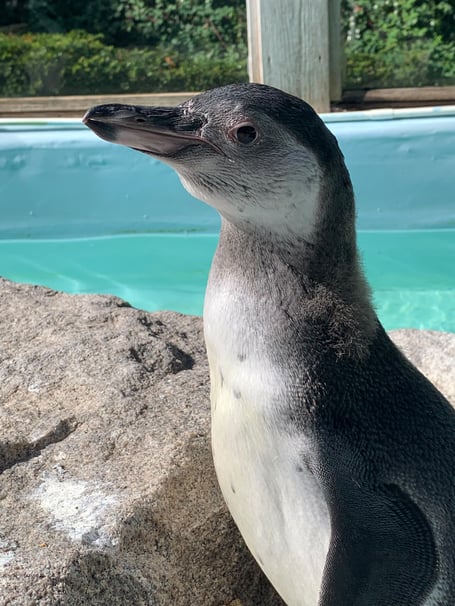
Four-month-old Dave is a Humboldt penguin, a species native to the Pacific coast of South America whose survival is threatened by overfishing and changing ocean temperatures.
Dave, who hatched in July, is now swimming in front of visitors and beginning to take fish from his keepers, although he is still largely reliant on his parents, Tilly and Alfie.
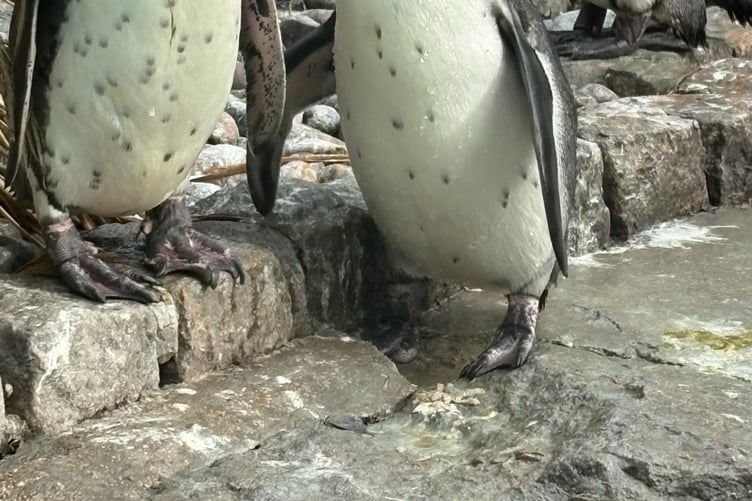
Mandy Glass, conservation and education lead at Birdworld, said: “We’re so lucky to have these wonderful birds and each chick is just a blessing.
“You know when you’re talking about species that one day could go extinct, each individual is incredibly important and it’s our responsibility as a zoo to look after these birds and make sure they’ve got a healthy, genetically diverse population.”
Dave is becoming increasingly independent and can easily be distinguished from the adult penguins by his juvenile feathers.
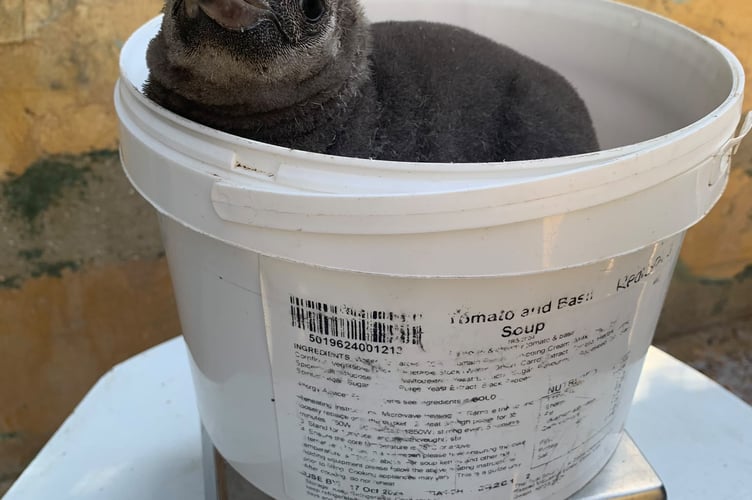
Ms Glass said: “He’s been out and about for maybe three weeks now. He’ll swim around, he likes to swim down the front.
“He does look quite different to the adults because he still has his baby plumage. It's still probably about a year before he goes through his first moult so you can definitely tell which one he is.”




Visitors hoping to catch a glimpse of Dave are advised to head to the Humboldt penguin enclosure during the daily feeding session at 11am.
A survey of 34 islands and peninsulas along the Peruvian coastline found Humboldt penguin numbers had fallen by around two-thirds between 2022 and 2025, from more than 15,600 to around 5,400.
The species is classified as vulnerable on the International Union for Conservation of Nature (IUCN) Red List, although scientists have called for its status to be reassessed amid growing concerns about its future.
Comments
We've recently changed our login process. If you have an account for commenting, you will need to re-register on the login window.
This article has no comments yet. Be the first to leave a comment.