
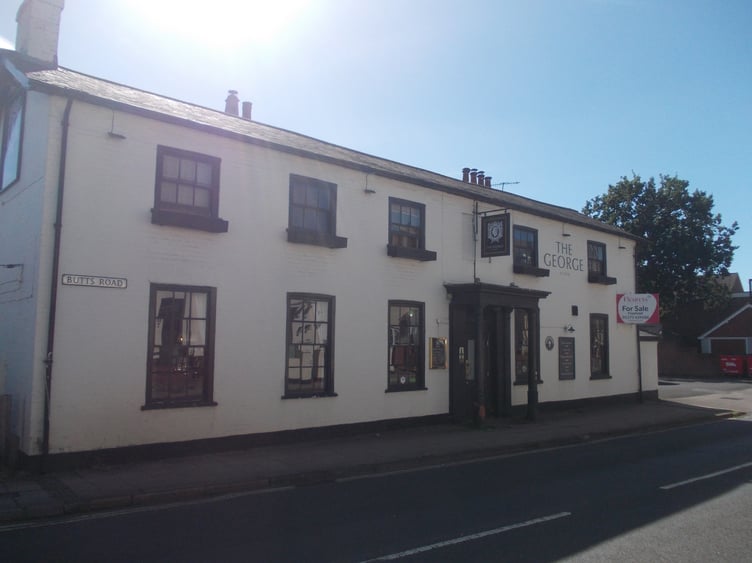
Few Alton pubs can claim a history stretching back nearly three centuries - or quite so many changes of name, writes Jane Hurst.
The building long known as the Duke’s Head began life in the 1740s as the Bishop Blaze, a name linked to Bishop Blaise, patron saint of woolcombers at a time when woollen cloth was one of Alton’s principal industries.
Its appearance beside the road was probably encouraged by plans to improve the Alton to Winchester route into a turnpike, complete with a toll house nearby.
But the Bishop Blaze name did not last long.
Following the Battle of Culloden in 1746, the pub became the Cumberlandshead, after the Duke of Cumberland, before appearing in records around 1748 as the Duke’s Head Alehouse. At that point the property included a house, stable, garden and brewhouse.
The pub became closely associated with another great feature of Alton life – cricket.
In 1822, James Birt, an ostler at the Duke’s Head, took part in a match on Alton Butts in which he scored 61 of his side’s 63 runs.
Eight years later, Birt – also recorded as Burt – was acting as the contact for a challenge in which three players offered to take on any three cricketers in Hampshire for £10 a side.
He later became landlord himself and continued playing. In 1838 he turned out in a two-day match on The Butts, while in 1843 he represented the Players of Hampshire against the Gentlemen of Hampshire at Southampton.
Perhaps most remarkably, records suggest he continued playing cricket until only days before his death – despite weighing 22 stone.

The Duke’s Head of his day was already a substantial establishment. By 1841 it had stabling for 30 horses, while later advertisements boasted of good stabling, beds and a lock-up coach house.
The arrival of the bicycle age brought another change in clientele.
In 1880, landlady Eliza Cullingford donated a handsome timepiece as first prize in a five-mile handicap race organised by Alton Bicycle Club. She later advertised the Duke’s Head as an “appointed rendezvous for bicycle clubs”.
Her successor was another intriguing character. Alfred Beadman, who took over in 1881 aged 62, was recorded in the census as a British subject born in Persia.
By the early 20th century the Duke’s Head was owned by Courage & Co. Albert Wateridge, who also ran the nearby White Horse, was associated with the pub into the 1920s.
It was around this period that the distinctive scrolled ironwork for the pub sign was made by local blacksmith Nimrod Lock.
Through its long life the pub had watched Alton change from a town of woolcombers, turnpikes and horse-drawn traffic to one of bicycles and motor cars.
And after more than 250 years as the Duke’s Head, there was one more change.
The pub was renamed The George by new owners who wanted it to share the name of their business in Petersfield.
But behind the newer name lies a remarkable slice of Alton history – from woolcombers and Culloden to cricketing landlords, 30-horse stables and Victorian cycling clubs.
Comments
We've recently changed our login process. If you have an account for commenting, you will need to re-register on the login window.
This article has no comments yet. Be the first to leave a comment.