
Summer is well and truly here, and for many of us that means trips to the seaside – sunshine, sand, ice cream and, perhaps, a few shells collected along the way.
At Haslemere Museum, the beach means more than just a day out. Shells, rocks, fossils and seabirds can all tell fascinating stories about the natural world and our own past.
The museum has an extensive natural history collection which includes many things conchological – relating to the study of molluscs, animals without backbones which often have shells. These include clams, snails, slugs, octopuses, squids, nudibranchs and oysters.
The museum’s first curator, Ernest Swanton, regularly referred to the 1892 List of British Land and Freshwater Mollusca, produced by the Conchological Society, in his work. Swanton went on to become something of an expert on shells himself, writing many publications about the native molluscs of our land and sea.
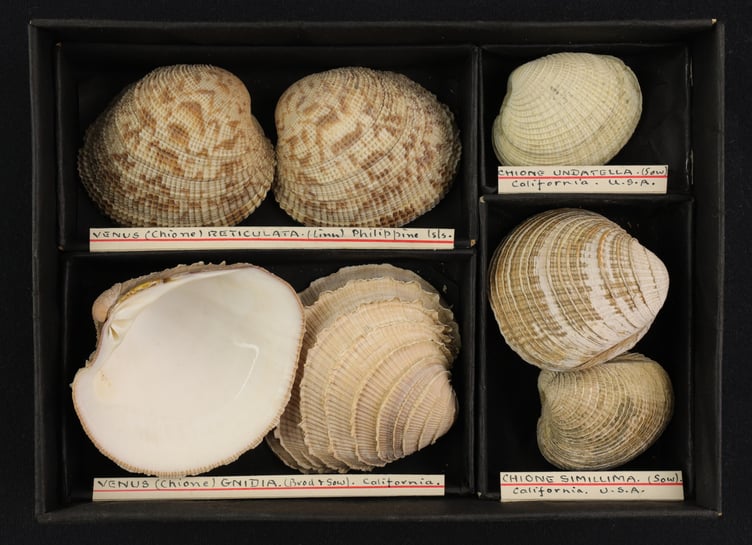
The 1892 list, and subsequent updates, were used to help identify shells in the extensive Moses Collection, which was donated to the museum some 50 years later. Some of the collection’s Venus shells are currently on display in the museum’s new exhibition, 100 Years on the High Street.
On a smaller scale, the museum’s collection also includes a 20th-century OXO tin, its renewed purpose revealed by a paper label on its lid noting “Isle of Wight shells”.
Shells have long been important to science, influencing people such as the famous biologist and naturalist Charles Darwin (1809-1882). During his voyage in the 1830s aboard the Admiralty surveying vessel HMS Beagle, which was charting the coast of South America, Darwin studied and collected thousands of shells. Some are now in the collection of the Natural History Museum.
What he saw helped shape his views on how the Earth was formed. At St Jago, he observed a white layer of compressed shells some 30 feet above sea level, while high in the Andes he found fossilised sea shells.
Long prized for their natural aesthetic appearance, the practice of collecting shells – known as conchylomania – goes back at least a hundred thousand years. Shells have been, and in some cases still are, used as tools, currency and jewellery, and to decorate indoor and outdoor spaces.
Shell collecting was particularly popular in the 18th and 19th centuries, with enthusiasts sometimes spending huge sums of money on rare specimens.


Rocks and shells also gave their name to an exuberant design style, the Rococo, which emerged in France during the reign of Louis XV. Most often seen in interior decoration, furniture, silverwork and ceramics, Rococo is characterised by sinuous, asymmetric curves, often based on rocks, shells and plants.
The style travelled to England with Protestant Huguenot designers and craftsmen and was first seen in design engravings and silver objects in the 1730s. Furniture designers Mathias Lock and Henry Copeland published Rococo design books in the 1740s and 1750s, inspiring a generation of woodworkers, including furniture maker Thomas Chippendale. Painter William Hogarth and the circle of artists who gathered at Slaughter’s Coffee House on St Martin’s Lane, London, were also influential.
Molluscs are often found in archaeological contexts and can provide information about a wide range of matters, including diet, economy and trade, climate and land use.
The museum collection includes two oyster shells which formed part of household debris unearthed during silt removal operations at South Park Moat, near South Park Farm, Grayswood.
This monument is one of around 6,000 moated sites in England and likely dates from around 1300 AD. Its wide, square ditch is likely to have encircled an earthen mound on which a house belonging to the Lord of the Manor would have stood.
So, if you are heading to the coast this summer, take a closer look at the shells beneath your feet. They may be small, but they can tell some very big stories.
Comments
We've recently changed our login process. If you have an account for commenting, you will need to re-register on the login window.
This article has no comments yet. Be the first to leave a comment.