
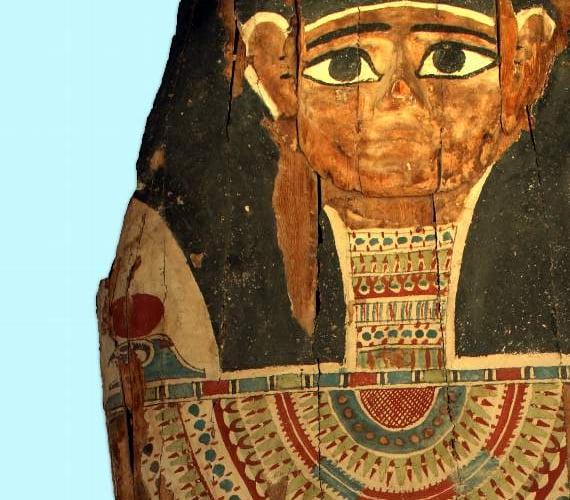
This December marks just over a century since one of the most breath-holding moments in archaeological history — the day in 1922 when Howard Carter first gazed into the long-sealed tomb of Tutankhamun. When his patron, Lord Carnarvon, asked nervously if he could see anything, Carter’s reply entered legend: “Yes, wonderful things.”
News of the discovery travelled fast, sparking worldwide fascination with ancient Egypt — and it reached even the quiet streets of Haslemere.
Tutankhamun ruled during Egypt’s Eighteenth Dynasty between 1336 and 1327 BC, and his tomb had lain hidden in the Valley of the Kings for more than 3,000 years. Carnarvon had funded Carter’s search since 1914, but by 1922 his patience — and his money — were nearly exhausted. Persuaded to finance one final season, he unwittingly backed one of the greatest discoveries of all time: the most intact pharaonic burial ever found, packed with thousands of objects that would take Carter a decade to record.
Tragically, Carnarvon died just two months after the tomb was opened. His sudden death, followed by a string of misfortunes linked to the excavation team, gave rise to the enduring myth of the “mummy’s curse”. Its curious link to Haslemere came through Hindhead resident Sir Arthur Conan Doyle, whose wife was a medium. He speculated publicly that Carnarvon’s fate may have been caused by “an evil elemental” spirit guarding the tomb.
.jpeg?width=209&height=140&crop=209:145,smart&quality=75)


Long before Tutankhamun’s treasures stunned the world, ancient Egypt had already found a quiet foothold in Haslemere. Among the town’s most curious inheritances is a human mummy believed to have arrived around 1912 or 1913, donated by the Church of England Sunday School Institute. For generations of local children, it became an unforgettable sight — not least because its toes protrude from the wrappings.
In June 1960, the mummy was examined on national television when the BBC programme Tonight arranged for it to be X-rayed, with presenter Alan Whicker in attendance. The results suggested the man was around 26 years old and had lived during the Ptolemaic period, about 300 BC. Injuries to the bones hinted at a violent death. His coffin, thought to have been reused, bears hieroglyphs naming him Pa-Er-Abu, and its red-painted lid indicates a male burial. Nearby, mummified animals — hawks, cats and even baby crocodiles — offer further glimpses into the rituals of the ancient world.
It is these enduring links — between global discovery and local memory — that form the heart of Haslemere Museum’s Egyptology exhibition this winter, quietly reconnecting the town with a story that once gripped the world.
Haslemere’s Egyptian story is not limited to burial rites and artefacts. It also runs through the work of artist Walter Tyndale RI, who settled in the town with his wife Evelyn in the mid-1880s. Originally an oil painter, Tyndale turned to watercolours after being asked to teach the technique — a change that transformed his career.
By 1904 he was living at Broad Dene on Hill Road, next door to geologist Sir Archibald Geikie. As colour printing advanced, Tyndale travelled widely in North Africa and the Middle East, producing some of the era’s most evocative images of daily life and architecture. His books, including Below the Cataracts (1905) and An Artist in Egypt (1912), brought distant desert landscapes into Edwardian drawing rooms.
During one of his Egyptian journeys, Tyndale worked alongside archaeologists from the Egyptian Exploration Fund and recorded the discovery of Queen Tiye’s tomb — grandmother of Tutankhamun. At Deir el-Bahri, beneath the towering mortuary temple of Hatshepsut, he even spent time in the company of Howard Carter himself. On one memorable day, the pair attempted — unsuccessfully — to deal with a cobra using nothing more than a shotgun and a pan of milk.
Letters from the period suggest Tyndale offered artefacts from his travels to Haslemere’s museum founder Sir Jonathan Hutchinson, further weaving Egypt into the town’s story.
A century on from Carter’s discovery, these objects, images and stories quietly endure in Haslemere Museum — linking a Surrey market town to royal tombs, desert camps, Edwardian artists and the enduring romance of archaeological adventure. This winter, as darkness falls early and Christmas lights glow outside, the “wonderful things” of ancient Egypt feel closer to home than ever.
Comments
This article has no comments yet. Be the first to leave a comment.