
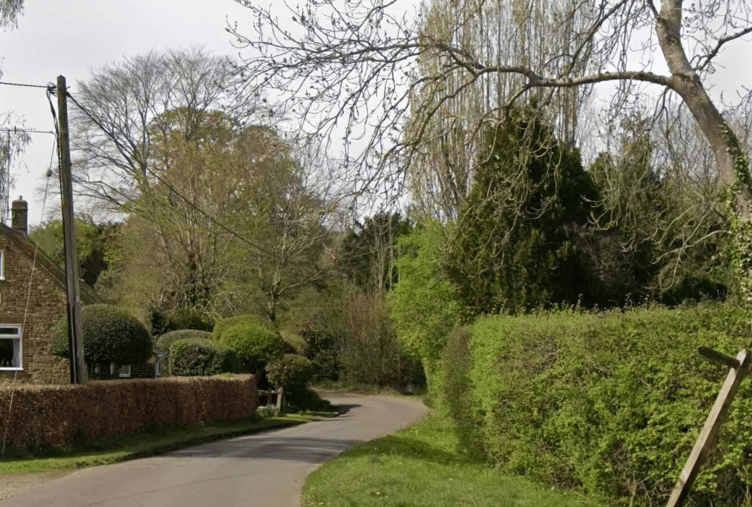
Today, Moushill Lane may appear a quiet, leafy corner of Milford, but over the past two centuries it has been home to everyone from agricultural labourers and servants to artists, engineers, writers and wealthy Victorian families, writes Helen McClure.
Its history reflects the transformation of rural Surrey itself, from a landscape dominated by agriculture and great estates to the residential communities familiar today.
Long before Milford developed into the village we know, Moushill was a small hamlet occupying an important position beside the Portsmouth Road.
Moushill Lane met what was then one of England’s busiest coaching routes between London and Portsmouth, forming a crossroads close to the entrance to Moushill Manor and its stable yard.
Manning and Bray, writing in The History and Antiquities of Surrey between 1804 and 1814, described Moushill as a small hamlet containing Oxenford, Borough, Sattenham and Rake.
At the centre of the community stood Moushill Manor.
Dating back to the 17th century, the original timber-framed house dominated the surrounding landscape, with cottages, smallholdings, shops and eventually substantial houses developing around it.
By the middle of the 19th century, the manor was being used as a residence for local clergy, while agricultural labourers, wood reeves and domestic servants lived nearby.
Its character began to change after it became part of the neighbouring Peper Harow Estate, owned by the Midleton family.
The manor was subsequently leased to wealthy private tenants.




The 1861 Census records unmarried sisters Mary and Louisa Dacre living there, both described as “Fundholders” and able to live on their investment income.
Their household included a cook, housemaid and lady’s maid, as well as a married teenage kitchen maid and her 16-year-old husband.
By the 1870s, the manor had become home to members of the Courage brewing family and later the Kingslake family.
But wealthy residents lived alongside the gardeners, coachmen, bricklayers and agricultural workers who continued to make their homes in the smaller cottages nearby.
The arrival of the military in the wider area brought another significant change.
Aldershot became Britain’s first permanent military camp in 1854, while the commons and heathland around Milford and Witley were used for military exercises and rifle training.
Thousands of soldiers passed through the area in the decades that followed, with Canadian troops stationed nearby during the First World War and Polish forces during the Second.
Local businesses benefited from the influx, with some entrepreneurs erecting corrugated-iron shops near the camps to cater for soldiers.
The military presence also became woven into village life. Baseball was reportedly played instead of cricket on Milford recreation ground, while romances developed between soldiers and local women.
One former serviceman even made Moushill his permanent home. In 1921, a modest cottage was occupied by Canadian-born David Watson, who had settled in Milford after the war, married a local woman and became a hairdresser.
By the end of the Victorian era, Moushill Lane was changing again.
The 1891 Census shows established farming families living alongside gardeners, bricklayers and coachmen, while larger properties were increasingly occupied by people of independent means attracted by the Surrey countryside.
During the Edwardian period, farms gradually disappeared and country houses took their place.
One resident was landscape painter James Thwaite Irving, whose work captured the rural character of Lower Mousehill Lane – which, unlike Moushill Lane itself, retained the extra “e” in its name.
By the 1920s and 1930s, the lane had attracted a remarkable collection of residents.
Among them was Leonora Eyles, a prominent feminist journalist and novelist whose writing challenged the social conventions of her time. She moved to Surrey in search of cleaner air and countryside for her children.
Another resident was Dr Alexander Campbell, chairman of the Hunslet Engine Company and a leading locomotive engineer who had helped organise wartime engineering production during the First World War.
Sir Algernon Edward Aspinall also retired to Moushill Lane following a career connected with Britain’s Caribbean colonies. He helped establish the Imperial College of Tropical Agriculture in Trinidad and became a leading administrator of British West Indian affairs.
The theatrical world was represented by actress Tonie Bruce, born Sybyl Etonia Penrose Bruce, whose father Edgar Bruce was the Victorian actor-manager who built London’s Prince of Wales’s Theatre.
She lived in the road for more than 35 years and sold plots from her estate, directly influencing the later development of the lane.
Yet Moushill never became an exclusively wealthy enclave.
Its smaller properties continued to house working families, labourers, hawkers and industrial workers, while some families lived in caravans.
One cottage was home to a family whose eldest son worked as a balloon taper during the Second World War, producing barrage balloons at the RFD factory in Godalming.
The years surrounding the Second World War also brought perhaps the biggest physical transformation in Moushill’s history.
The Midleton family began selling land belonging to the Moushill estate and the manor that had dominated the hamlet for centuries was gradually fragmented.
Former coach houses, stables and farm buildings became separate residences, while the estate was divided into individual properties.
It was a pattern being repeated across Britain as large estates became increasingly expensive to maintain, domestic servants became harder to employ and economic pressures forced owners to break them up.
The result was the pattern of individual homes that largely survives along Moushill Lane today.
Within the history of one relatively short Surrey road can therefore be found a much broader story – of agriculture giving way to residential development, great estates being broken apart, military camps transforming communities and people moving from London and elsewhere in search of life in the Surrey countryside.
For generations, farm labourers, servants, soldiers and tradesmen lived alongside industrialists, writers, artists and actors.
What looks today like a peaceful Milford lane is, in many ways, a microcosm of English social history.
*Helen McClure is the interior designer behind At Home by Design, a Surrey-based interior design studio specialising in creating interiors that reflect both a client's lifestyle and the character of their property. She can be found on Instagram at @athomebydesign1, by visiting www.athomebydesign.co.uk or by emailing [email protected].
Comments
This article has no comments yet. Be the first to leave a comment.