
SURREY Police has undergone seismic change in recent years. Faced with sweeping cuts to the force’s budget, police stations have closed, back-office staff have been cut and less ‘bobbies on the beat’ are now seen routinely walking the streets.
But in stark contrast to most other forces across the UK, officer numbers have actually increased in the county in recent years - with Surrey Police now counting 2,009 officers on its payroll, an increase of 119 since 2010, making it one of only three forces to increase officer numbers during this period.
This is thanks to a dramatic restructuring of the force in April 2016 - dubbed Policing in Your Neighbourhood (PIYN) - seeking to realign the force to meet modern demands and ensure those who most need police help get it.
In the second of a series of articles focusing on the changing face of policing in Surrey, the Herald spoke to West Surrey response team Inspector Rachel Griffiths about how PIYN, or ‘pin’ as it is referred to by officers, has fundamentally altered the way officers respond to emergencies.




“Under PIYN, everyone on the response team now carries out investigations from beginning to end which we never used to do, as well as the immediate response to jobs and some of the neighbourhood roles,” Rachel told the Herald.
“We still have neighbourhood teams but they concentrate on the more chronic problems, the long-term issues that people care about - whereas my team, the area response team, will do the immediate response to jobs, whether it’s a stabbing, a traffic accident, a shoplifter, or a missing person and follow it through to the end.
“Staff wise I think people do enjoy it, and there’s that satisfaction out of seeing that job from beginning to end, where they’ve gone and responded initially, interviewed and bailed, gone to court with somebody and then seen the end result.”
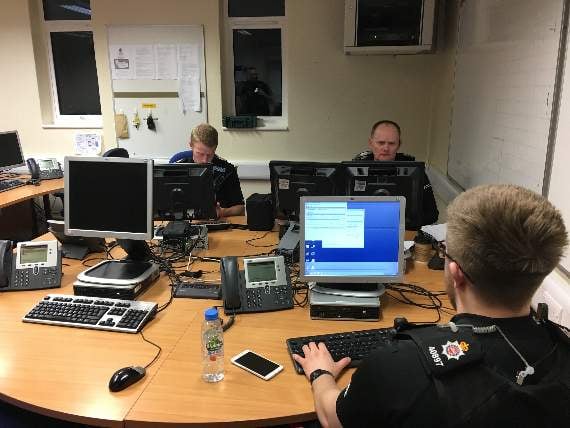
Rachel explained the Waverley response team starts each shift - earlies, days, lates or nights - at Guildford police station where they are briefed on the night’s priorities and ongoing incidents, as well as catching up on the previous day’s activities.
This briefing is key to PIYN, she added, requiring officers to more effectively target their patrols based on intelligence - focusing on key priorities and objectives such as disrupting Waverley’s ongoing burglary issue.
It is also perhaps the main reason why the old fashioned ‘bobby’ is seldom seen idly treading pavements in Waverley.
“Our briefings are very much about getting people in the right place at the right time, because that’s more efficient than saying we’ve got an officer whose spent all day walking around Farnham town centre that didn’t particularly have a task in mind,” Rachel continued.
“We don’t tell people to go out aimlessly. A big part of our brief is to set them up and say these are the issues that the public are concerned about, or that intelligence is saying we need to deal with, and then we’ll focus on that.”
PIYN has also heralded the rollout of new technology - chief among which is the new smart phone-based mobile data terminals (MDT) which have drastically cut the time officers spend travelling to and from police stations to file paperwork and fulfil other simple tasks.
“The MDT is like the old fashioned police officer’s notebook,” Rachel said. “In the olden days, officers would write where they were on duty and when, and then you had to come back to a police station to email an update or fill out a word document.
“Now officers can get out their phones, see the neighbourhood priorities and where they need to be, tell us instantly that they’ve deployed to an incident, read all the information about that incident, update it, check the police national computer, bring up photos of missing people, write notes and send emails - and they even have little printers in their cars to print tickets or calling cards if someone they want to speak to is not at home.
“It saves a huge amount of time and staff resources being able to do that at the press of a button and has made things far more efficient.”
Rachel added Surrey Police has also improved the way it uses CCTV in recent years, as well as working more closely with pubs and clubs - the so-called ‘night time economy’.
“Farnham is covered by our CCTV system, and they are tied in with pubs and clubs on the town link system which can all call up and say ‘I’ve got concerns about this person, they’re acting in an aggressive manner’ and our CCTV operators in Guildford can monitor them, and call us if we need to respond,” she said.
“People don’t tend to see CCTV and realise the role it plays.”
Officers were also equipped with new body-worn cameras shortly after the introduction of PIYN to record incidents as they are unfolding and capture vital evidence.
Rachel continued: “It helps with our safety, so in incidents when people are being aggressive you can say I am going to start filming you and press the button, and their behaviour changes. It’s quite interesting from that point of view.
“It’s really hard to capture the chaos that you’re faced and the behaviour of people when you first turn up at an incident. But rather than spending hours describing it in court, you can just show the video or stills to the jury and help them make a decision.
“It doesn’t sound much but all these little things frees up officer time.”
Comments
This article has no comments yet. Be the first to leave a comment.