
Ratty is back in the river as water voles have returned to the Wey in Farnham after a 20-year absence.
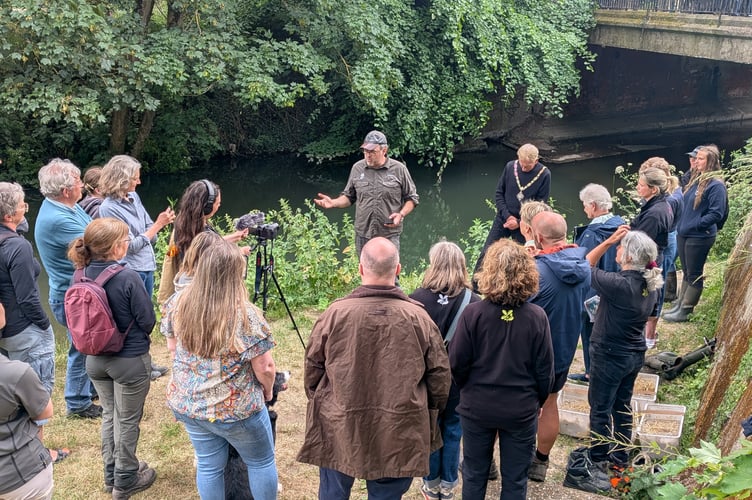
History was made on Monday afternoon when five water voles were released into the water beside the Haren Garden.
The release was part of a long-running bid led by the National Trust and Environment Agency to reintroduce the keystone creature into the North Wey river catchment area.
Nearly 300 more were released into the river on the same day between Froyle and Farnham in a moving afternoon for David Elliott, NT Lead Ranger for the South Downs West.


“I’ve been dreaming of seeing water voles in this part of Farnham for years,” said Mr Elliott, who is thrilled the “wonderful little animal” is making a comeback after being pushed to the verge of extinction.
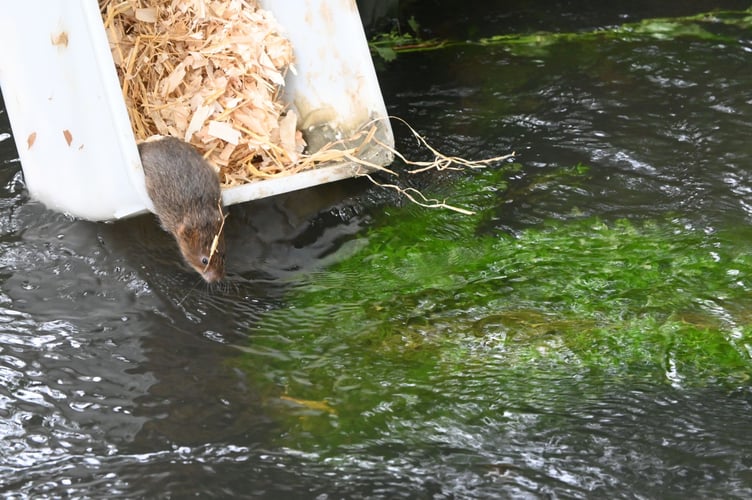
“Today isn’t just about turning up with a water vole in a box and releasing it into the river. It’s also about celebrating the work that has taken place in advance over the last three years to get us to this stage, because we’ve now got conditions where the river is ready for these creatures to return.”
Mayor of Farnham, Cllr Graham White, was one of five “VIPs” that released the water voles into the river on Monday.
The event was the public side of a much larger release and the second of two to take place across the 87-mile catchment area.
Habitat loss and predators have almost pushed water voles to extinction over the last century, with “Poor Ratty” becoming Britain’s fastest declining mammal.
It has been declared locally extinct before reintroductions began around Liphook, Haslemere and the South Wey area last August, with recent surveys confirming their initial populations have established successfully.
The work has been funded by the NT, Environment Agency’s Water Environment Improvement Fund and the Black Down and Hindhead Supporters of the National Trust.
The voles released into the Wey on Monday – they were a little bit camera shy on the day – were bred in a large pen near the Devon and Cornwall border by Derek Gow Consultancy.
It is hoped their numbers will soon reach three or four figures on the Wey following three years of co-ordinated activity.
Water voles play an important role in the biodiversity of riverside ecosystems as they’re a source of food for struggling predators like barn owls and otters.
But they’re also a boon for biodiversity as they help reshape habitats and create space for rare plants to grown where they graze on grasses and rushes. They also eat the toxic hemlock, which is often abundant on riverbanks.
“I hoped one day we would be able to see water voles return to the River Wey around here – they are such iconic animals,” said local volunteer and Farnham resident, Libby Ralph.
“It has been inspiring to be part of this project and realising how many more people are enthused by it.
“I hope this lays the foundation for many more actions for wildlife in our wonderful river corridor.”
Comments
We've recently changed our login process. If you have an account for commenting, you will need to re-register on the login window.
This article has no comments yet. Be the first to leave a comment.