
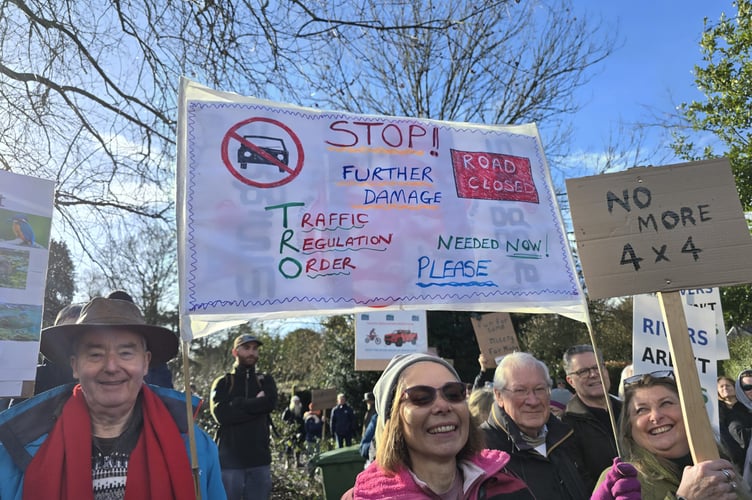
Work is set to begin on plans to protect one of Hampshire’s rare chalk streams, as officers prepare to review vehicle use at a historic river crossing in the Meon Valley.
The review follows calls in January after a protest in Droxford, where more than 150 residents, environmental groups, councillors and the local MP raised concerns over continued 4×4 and motorbike use through a 200-metre stretch of the River Meon at Mill Lane.
Following the protest, Green Party district councillor Malcolm Wallace called on Hampshire County Council to introduce an experimental Traffic Regulation Order (TRO) to stop motor vehicles using the river crossing.
He also suggested a stopping-up order could be considered.

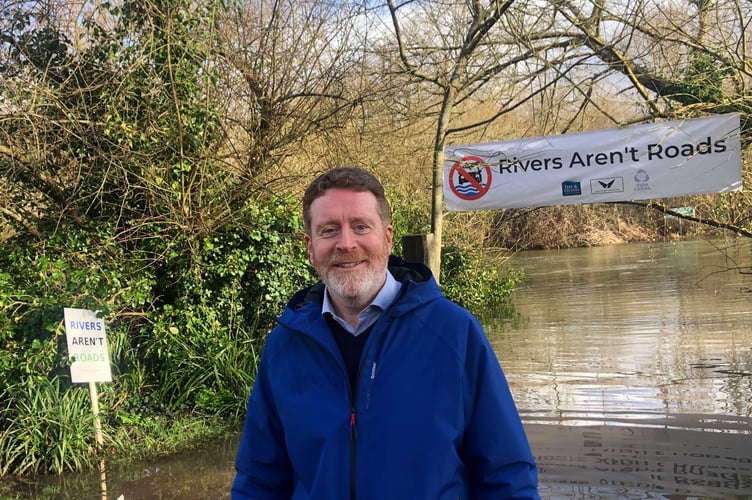
The council said at the time it was taking legal advice and planning traffic and environmental surveys.
In a recent update, Hampshire County Council confirmed traffic surveys at the site will start in June 2026. These will record how often the crossing is used and what types of vehicles pass through.
If funding is approved, ecological monitoring is also due to begin in summer 2026, with agreement from Natural England. This will set a baseline of the river’s condition and compare it with other parts of the River Meon.
The monitoring is expected to run for 12 months to capture seasonal changes.
After the work is completed, the council will review the findings before deciding what to do next. One option is an experimental Traffic Regulation Order (ETRO).
An ETRO is a temporary traffic order that lets changes be tested first. It allows the impact to be monitored before a final decision is made.
The process before a trial begins usually takes around four to eight weeks. An ETRO can stay in place for up to 18 months and cannot be extended.
Reacting to the update, Cllr Wallace said delays would be frustrating for residents, given how long concerns have been raised. However, he said he would “press” to ensure the surveys are carried out without delay.
He said: “It’s clear that timescales have slipped, which will understandably be frustrating given how long this issue has been ongoing.
“While it’s important that decisions are based on robust evidence, I will be continuing to press for progress, particularly to ensure that the planned surveys proceed without further delay, and we move through the next stages in a timely way, so that clear decisions can be reached.”
The River Meon, which rises in the South Downs, is home to several rare species such as water voles, brown trout and otters.
Cllr Wallace has previously warned the river is “extremely sensitive” and cannot “withstand repeated physical disturbance”.
In 2023, the county council commissioned a report which found vehicles in the River Meon were harming biodiversity and recommended closing the forded section of the byway.
But after a year, the council decided not to bring in a traffic order. A later draft report suggested there were “no major concerns” in the area.
Comments
We've recently changed our login process. If you have an account for commenting, you will need to re-register on the login window.
This article has no comments yet. Be the first to leave a comment.