
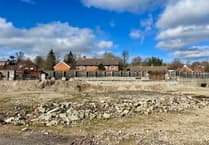
CALLS have been made by more than 40 concerned residents for Chicheser District Council to reject the proposed allocation of a “totally unsuitable” site for 10 new homes at Camelsdale.
Meetings of both CDC’s cabinet and its full council committees will be held on Tuesday, March 7, and the cabinet is asked to recommend the plot next to Thames Water’s Sturt Avenue water supply pumping station is included in the site allocation development plan document in its Local Plan, which is up for adoption in December.
But Lynchmere Parish Council and both ward district councillors have objected that the site, which was previously discounted due to access problems and because it provided a natural “buffer” between settlements, has been reinstated despite still being unsustainable.
Thames Water Utilities also raised concern over the access to the proposed housing site using its own single-track road off Sturt Avenue with a bridge over the River Wey, which is also used by chemical delivery lorries that could potentially block access to the development.


Clerk Kate Bain said: “Lynchmere Parish Council has responded to the sites allocation consultation in detail, pointing out the difficulties of development – and in particular on the flooding and access risks.
“CDC has relied heavily on the evidence presented by the potential developers to support its argument for allocating this site. Little or no regard has been paid to the issues raised by residents or the parish council.
“The process of the consultation has been unsatisfactory as statutory consultees, including West Sussex County Council, the highways and flood management authority, and the Environment Agency, were not pressed to submit substantive responses in a timely manner.
“Lynchmere PC has questioned whether due process has been observed, and are concerned there has been a lack of transparency which, given the pressure for CDC to find suitable development sites may result in a flawed decision.
“LPC has made a formal complaint to CDC regarding the way the consultation has been conducted.
“We feel we could find alternative windfall sites for 10 houses and there is a possibility of other land becoming available in the next five years. The fact we were given a New Homes Bonus by the distric council shows the parish has supported housing development where we can.”
Fernhurst district councillor Norma Graves said: “I have very serious concerns about the soundness of the process which has been followed for the site allocation consultation.
“Great concerns were also expressed by a resident representing the 47 other residents who had written in answer to the consultation.
“These very real concerns, supported by photographs, showed strong evidence of groundwater flooding, drainage and other water problems. There are also serious traffic and access constraints along Moorfield, which is extremely narrow allowing one car at a time, no passing place and with parking on one side of the road as the houses have no garages.”
She added that Moorfield leads to Sturt Avenue and Orchard Close before reaching the narrow unmade track serving the pumping station, and the roads were not built for the current level of traffic and Camelsdale School pupils walk down Moorfield to reach the school grounds.
Mrs Graves added: “The concerns were listened to but we were told none of the statutory consultees had made any negative comments on the application.”
Resident Kevin Rait said: “The inclusion of this land is not justified based on the lack of local community engagement or support for this proposal. In addition, there are other alternatives noted in the CDC sustainability report that were relatively more attractive.
“Lynchmere was originally allowed to remove the allocated housing number of 10 as no suitable sites were available. No reasonable explanation has been given on why this decision has been reversed. The decision to submit a site was one of the worst options in terms of sustainability is inconsistent with the stated aims of the local plan.
“The guidance notes state the DPD should be based on a robust and credible evidence base involving evidence of participation of the local community.
“During the submission phase, a large amount of evidence was supplied by residents and objections were raised by both the parish and district council.
“This evidence was not properly considered when putting forward the Sturt Avenue site.”
The public consultation on the proposed site allocation closed at the end of January. A district council spokesman said if the council agreed the development plan document (DPD) it would be submitted to the Secretary of State for independent examination by the Planning Inspectorate at the end of March.
The hearings which form part of the examination would likely take place in July and all comments made at the proposed submission consultation, between December and January 26, including those made by the parish council, will be forwarded to the planning inspector for their consideration.
The spokesman said: “If the inspector considers it is necessary they will invite them to an examination hearing, if one is being held.
“The process of allocating a site in a development plan document is to establish in principle it can be located on a particular site.
“If the allocation is supported by the inspector then a subsequent planning application will need to be submitted and considered by the council. It is too late in the DPD process for people to write in with their concerns.”
Find out about planning applications that affect you by visiting the Public Notice Portal.
There had been a two stage public consultation where representations were made and considered by the council, he added.
Comments
This article has no comments yet. Be the first to leave a comment.