
Walking into Farnham town centre on any weekday morning, the picture has been much the same for months: barriers, diggers, diversion signs, and traders standing in doorways watching the traffic crawl past.
Ask them whether it's been worth it, and you'll get almost as many answers as there are shopfronts.
The Farnham Infrastructure Programme, led by Surrey County Council, began in February 2025 as a multi-million-pound bid to reshape the town centre: wider pavements, safer crossings, sustainable drainage, dedicated loading bays, and new bus shelters with real-time information.
Several months on, the question dividing Farnham is no longer about the design, it's about whether the results are worth the disruption.
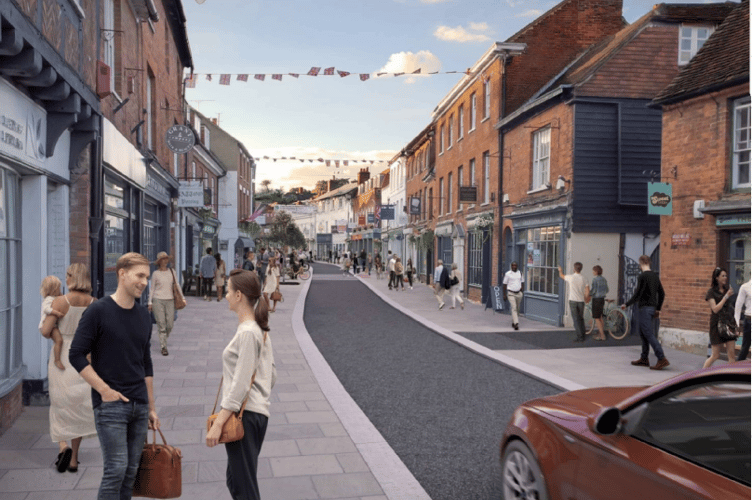
For businesses on The Borough and Downing Street, the effects of the roadworks have been impossible to miss, with several reporting a drop in footfall and even some shops going out of business possibly as a result.
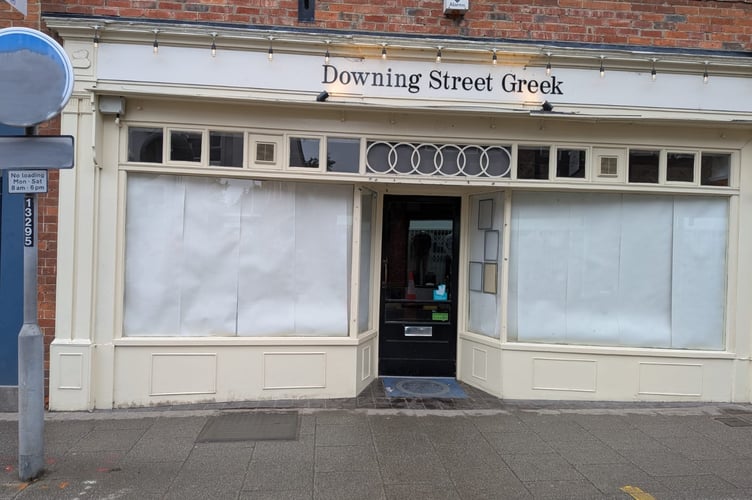
Downing Street Greek, Silvana's and Petite Patisserie all cited the roadworks as a primary factor for their closures, with the Greek restaurant estimating a footfall drop of close to 90 percent at the worst point.
Traders told councillors that businesses were losing turnover of as much as 50 percent - a figure that sits uncomfortably alongside the council's insistence that the programme remains on track, and one of several conflicting accounts of the works' impact on trade that nobody has yet fully reconciled.
The hard property data doesn't straightforwardly back up the picture of a town in retreat, though it isn't a simple story of resilience either.

According to local estate agents Curchod & Co, Farnham's retail vacancy rate stood at 10.46 percent in late 2024, just before the works began, up from 9.15 percent the quarter before.
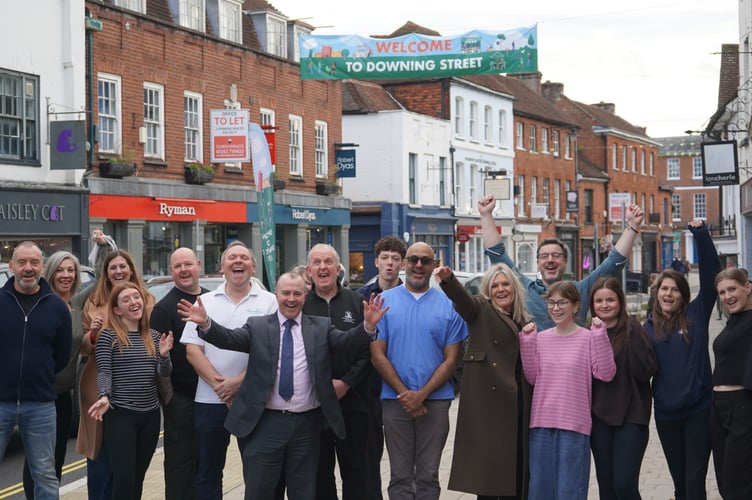
Once the roadworks got under way, vacancy jumped to 14.38 percent in early 2025 but rather than continuing to climb, it fell back to 11.76 percent the following quarter as four units were let, among them a new Magnet kitchen showroom and, with a certain irony, this newspaper's own move onto Downing Street.
By the third quarter it had held broadly steady, with four further lettings completed and three more under offer. Harry Ford of Curchod & Co described the picture as one of a market "quietly stabilising resilient, if not thriving”.
It leaves an uncomfortable question hanging over the 50 percent turnover figure: if trade is down that sharply for some, why has the town, on this measure, already begun to recover?
Footfall data collected by Waverley Borough Council paints a similarly nuanced picture. Across the whole of 2025, Farnham town centre recorded a marginal increase of 0.3 percent compared with 2024, despite the disruption caused by the roadworks.
The monthly figures, however, reveal a much sharper pattern. Visitor numbers rose consistently during the spring, peaking at 3.6 percent above the previous year in March, before falling once major road closures intensified.
September, when Downing Street was closed to through traffic, recorded the largest decline at 2.6 percent below the previous year, with October also down 1.8 percent. Each period of recovery following the easing of restrictions was followed by another decline as further phases of work began.
The pattern has continued into 2026, with footfall between January and May running 1.7 percent below the same period last year. Although March saw a brief recovery of 2.7 percent, April fell to 4.1 percent below 2025 levels, suggesting that while overall annual visitor numbers have remained broadly resilient, individual phases of the programme have had a clear and measurable impact on town centre activity.
Farnham BID has pushed back on the idea that the roadworks alone explain the town's fortunes. BID manager Janie Elliott-Dunn said town centre performance depended on a much wider set of factors.
"Town centre performance is influenced by many factors, including the wider economy, consumer confidence, online shopping, the weather, seasonal trends, and national spending habits, as well as local circumstances," she said.
"While infrastructure works can have an impact, they are only one part of a much wider and more complex picture." She said the BID continued to monitor footfall data and had represented traders' views directly at FIP meetings and with local councils.
However, not everyone accepts that the finished scheme is an improvement on what it replaced. Chris Meade, a resident of Rowledge, argued the town centre worked better before the "improvements."
He believed the old one-way system relied on driver courtesy rather than traffic lights and coped reasonably well with rush-hour traffic; his one complaint about it was potholes and the road surface.
He argues the new part one-way, part two-way system squeezes traffic into single lanes and now requires stop-start lights at the top of Downing Street, lights he says exist chiefly to accommodate a right turn at the bottom of Castle Street that he considers illogical.
The result, he has observed, is queuing along West Street, Long Bridge, East Street and Dogflud Way, which critics predicted before work began.
The widened pavements strike him as a poor trade-off if tables now sit metres from idling traffic, and while potholes in the town centre have reduced, he points out that surfaces outside the town centre in areas like The Ridgeway, Boundstone Road and Lodge Hill Road ” remain untouched.
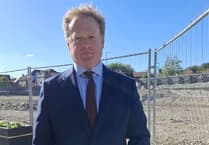
Farnham and Bordon MP Greg Stafford also criticised the support offered by the local authorities during the works.
He said: “While investment in our town is important, the disruption has placed real pressure on traders, commuters and local people.
“I have repeatedly pressed those responsible to provide proper support during the most difficult phases of the works and to do everything possible to minimise the impact.”
He claimed that support “has too often been lacking”
“Rather than backing our local businesses through the disruption, the Liberal Democrat-run council increased car parking charges, making life even harder for traders already coping with road closures and reduced footfall.
“Time and again, they appeared unwilling to acknowledge the pressures facing local businesses.”
He said the town centre works were “only one part of the wider picture” concerning Farnham’s road issues.
“I continue to press the Government at the highest levels to deliver long-overdue improvements to the A31, including Hickley's Corner, while also pursuing other long-term solutions to reduce traffic through Farnham,” he said.
“Progress has been far too slow, and I do not accept that these vital schemes can continue to be delayed."
Part of the frustration, residents and traders say, is less about the works themselves that the time taken for completion.
Downing Street was semi-pedestrianised from August to November 2025, reopened for Christmas, then closed again in January.
The Borough endured a three-month closure from January to March, extended after contractors ran out of paving slabs. A further full 24-hour closure, between Castle Street and the Royal Deer junction to complete the Borough works, is set for three weeks from 26 July.
Surrey County Council says a full closure was chosen over overnight working because it can be finished in three weeks over the quieter summer period, versus more than two months of night work.
All major elements of the scheme, including West Street, Victoria Road and Union Road, are now expected complete by the end of 2026.
The council has never disputed the disruption caused by the works, consistently arguing that the short-term pain is the cost of a genuinely overdue upgrade.
Cllr Tim Oliver, Leader of Surrey County Council and Chair of the Farnham Infrastructure Board, said the scheme had been designed to tackle longstanding issues around accessibility, road safety, air quality and public space, and had been backed by nearly 60 percent of residents in a 2022 consultation.
"Working in a constrained and historic town centre like Farnham was never going to be easy," he said. "We understand that footfall numbers remain broadly consistent compared to before works began and in line with other town centres in Waverley borough".
Whilst backed up by the data the claim is at odds with the lived experience by residents and drop in trade described by business.
Cllr Oliver pointed to completed sections wider pavements, additional seating and new planting ” as evidence the works were already delivering, noting that businesses had begun enquiring about outdoor seating licences.
"We still expect that main works will be complete this year as planned, and my continued thanks go out for people's patience," he said.
"I'm confident that when these works are finished, Farnham will have an attractive town centre which will remain a popular destination for years to come."
Tony Fairclough, a Lib-Dem Waverley Borough Council member, has defended the project team's engagement with businesses, pushing back on suggestions that traders and the council are simply at odds.
He has also defended the council's parking policy, after a Christmas trial of £1 after 1pm" parking prompted calls for it to be reinstated permanently.
"Where free parking was previously offered, it led to spaces being taken by commuters rather than shoppers, so it failed to provide a boost for local traders," he said.
Cllr Catherine Powell, who represents Farnham at Surrey County Council, said it was too early to properly assess the scheme’s impact.
She said the town must wait for post-installation assessments and the North and South Farnham Studies "hard fought for," she said, by her and fellow councillor Michaela Martin before the full picture becomes clear.
She characterised vocal social media criticism as coming from "a small but very vocal negative minority," against a larger, quieter majority sharing more positive views privately.
She said she remained frustrated by aspects of how the work had been carried out but believed it would ultimately be worthwhile, and was still pushing for design changes to The Borough between Castle Street and Downing Street to improve traffic flow without compromising bus or pedestrian priority.
Talk to enough people in Farnham and two entirely different views emerge. Residents broadly agree the two-year process has been difficult, but there is no consensus on whether it was worth it.
On one hand, there is a substantial investment in infrastructure that may not be repeated for some time, alongside routes intended to future-proof the town centre's shops.
On the other, it is a project that has repeatedly underestimated its own timeline, absorbed months of delay through supply problems, and asked traders to hold on for one more phase, and then another, while footfall and turnover suffer.
Both accounts are true. Whether Farnham looks back on 2025 and 2026 as the years it was rebuilt for the better, or the years it never wishes to repeat, depends on whether residents believe the long-term benefits live up to expectations and whether the short-term damage was worth it.
Comments
We've recently changed our login process. If you have an account for commenting, you will need to re-register on the login window.
This article has no comments yet. Be the first to leave a comment.