
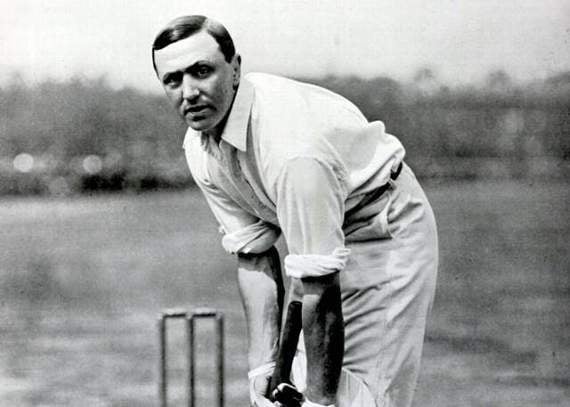
This article, by former Herald editor Peter Thompson, first appeared ten years ago. He has revised his account of a historic cricket match played at the brewery town of Alton more than a century ago.
TEN years before the outbreak of the Great War, Hampshire’s cricketers left the relative comfort of their Southampton headquarters to play a match on the recreation ground at Alton. Their opponents in what was to be the only first-class match ever staged in that small market town (population in 1904, 5,000) were the South Africans, making their third tour of England.
Unfortunately for Alton’s cricket lovers – as well as the already-stretched finances of the county club – what should have been a three-day match ended at 4pm on the second day, with the South Africans overwhelming winners by an innings and 19 runs.
The match had been keenly anticipated for weeks. The good folk of Alton, who were not used to finding themselves in the cricketing spotlight, welcomed the attention. This was no ordinary match, no mundane encounter with another county side. Alton had been entrusted with the big one. The South Africans were coming to town and the talk in Alton’s many pubs was of little else.
.jpeg?width=209&height=140&crop=209:145,smart&quality=75)

-pictured-alongside-old-Petersfield-team-mates-Bob-Pullin-Roy-Passingham-and-No.jpeg?width=209&height=140&crop=209:145,smart&quality=75)
There were no official Test matches played on this tour, the nearest thing being a match against an England X1. The South Africans won 10 of the 22 matches played against a mixture of strong teams, losing just twice.
The local press reported that ‘the committee of the Alton club, under whose auspices the Hampshire match was organised, had made every provision for the comfort and enjoyment of both players and spectators, and their arrangements were altogether excellent.’
Moreover, the report continued, ‘The weather was beautifully fine, and there was a large concourse of spectators on both days... it being the first first-class match ever to be played on the picturesque ground, which is somewhat small, with short boundaries, but otherwise satisfactory in all respects.’
The ground at Anstey Park had been laid out towards the end of the 19th century, taking over from The Butts, where Alton played matches against many of the neighbouring town and villages. Farnham, 10 miles along the road to the east and over the Surrey border, could always be relied on to provide strong opposition.
It was on The Butts that three famous cricketing brothers – Thomas, Henry and John Beagley, from Farringdon, near Alton – gave an early glimpse of their powers. Thomas became assured of his place in cricketing history when, in 1821, he became the first player to score a century in the Gentlemen v Players matches at Lord’s. He played professionally for Hampshire from the age of 26, but ran into financial problems towards the end of his career and moved to London in a bid to find work.
At Alton, the Springboks were led, a mite incongruously, by the Yorkshire and England amateur Frank Mitchell. How was it that a Tyke, albeit a posh one, led these South Africans? Mitchell, it transpired, had taken a liking to South Africa when touring with Lord Hawke’s team five years previously and remained behind when his team-mates sailed for home.
This 1904 tour, coming two years after the end of the Boer War, was financed by Sir Abe Bailey, a South African mining entrepreneur and philanthropist. In cricketing terms, the tour was a great success, but fell £2,000 short of the figure needed to break even. Nonetheless, South Africa had established themselves as being worthy of a permanent place on the Test match calendar.
The match gave cricket followers a brief glimpse of Reggie Schwarz, who had embraced and developed the googly from its inventor, BJT Bosanquet. London-born Schwarz passed on the technique to Gordon White, Aubrey Faulkner and Albert Vogler. These four had a significant impact on South African cricket with the ball delivered from the back of the hand.
Schwarz, who stood apart from the others in that he bowled the googly only, without any leg-spin variation, finished that 1904 tour with 96 wickets. His bowling at Alton was limited to 3.5 overs, but White was given more opportunity and finished the match with five wickets.
But we are getting ahead of ourselves... the South Africans had no hesitation in batting when they won the toss and raced to 380 in ten minutes under four hours. The momentum for this run spree was provided by Louis Tancred, the best known of the brotherhood of five, who reached 99 in just two hours before being undone by the lively pace of HV Hesketh-Prichard.
Here was a player in the best traditions of Hampshire amateurs – a man who played the game for his summer recreation, and who went on to become a widely-read novelist and traveller. Big-game hunter, explorer and soldier, he died aged 45, having crammed a lot into his short life.
After Tancred fell, White and Schwarz continued to strike the ball vigorously and peppered the short boundaries. White reached his 50 in 45 minutes and Schwarz hit 67 in an hour with 13 boundaries. White remained a force in South African cricket for the next decade, but perished in the First World War, dying from his wounds a month before the Armistice.
The innings closed at 380, shortly after tea, leaving Hampshire facing a testing hour and a quarter to the close of play. The county’s most successful bowler, though also the most expensive, was Charles Bennett Llewellyn, who finished with 5 for 160 from 36.5 overs of left-arm spin.
‘Buck’ Llewellyn was himself a South African who had been persuaded to join Hampshire as a professional in 1899. He enjoyed a successful decade with the county, doing the double on three occasions, and also played 15 Tests for South Africa.
Six years after the Alton encounter with his fellow countrymen, and in what was to prove his last season with Hampshire, Llewellyn bowled the county to an innings victory over Somerset on the Officers’ Club ground at Aldershot, returning figures of 6 for 61 and 7 for 45.
To his dismay, Llewellyn found himself caught up in the inter-racial tensions which often emerged to sour South African cricket long before the Basil D’Oliveira affair captured the headlines.
While the patent racism of late 19th century cricket in South Africa had led to other leading non-white players being omitted from representative sides, Llewellyn’s ability to pass himself of as white – Wilfred Rhodes described him as ‘like a rather sunburned English player’ – helped to clear the this particular hurdle to selection.
The late Christopher Martin-Jenkins, in his Biographical Dictionary of World Cricketers, recalls how Llewellyn’s daughter did her best to demolish rumours that he was a coloured man who had been ostracised by his Springbok team-mates on the 1910/11 tour of Australia.
In an article in The Cricketer magazine, she maintained that her father, though born in Pietermaritzburg, was of Welsh and English extraction and had no coloured blood. Nor, she claimed, had there been any bad feeling in the South African camp on that tour of Australia.
He was chosen to make his first-class debut for Natal against Transvaal on 13 April 1895, when he took four wickets. While now accepted as a cricketer, Llewellyn would be referred to as ‘coloured’ throughout his career, despite the later efforts of his daughter to prove otherwise.
Perhaps the daughter was saying what she wanted the world to believe, but the fact remains that Llewellyn is still widely regarded as the first non-white player to represent South Africa. This was in 1896, when he was 19. It would be nearly 100 years before another non-white player wore the Springbok colours.
Official records dismantle his daughter’s argument and show that Llewellyn was born out of wedlock in Pietermaritzburg to an English father and a black Saint Helenan mother. Being considered of mixed blood, the dark-eyed and dark-skinned Llewellyn endured an underprivileged upbringing in Natal.
None of this should have mattered, but this being South Africa, it did matter. Given all the rumours swirling around him, and the many tensions in South African life, it was hardly surprising that Llewellyn should choose to make England his adopted home. Hampshire offered him a career in the game and he grasped the opportunity. ‘Buck’ lived in Surrey and died at Chertsey in 1964, aged 88.
The Alton match was as good as decided in the final 75 minutes of that first day, with Hampshire collapsing to 87 for 7 in the face of Johannes Kotze’s searing pace. Reports called it an ‘exhilarating day’s cricket.’ The rampant South Africans would not dispute that assessment.
The county did recover slightly the next morning to finish on 168, the reliable Alec Bowell making 65, but it didn’t stop one reporter complaining that the team as a whole showed ‘a marked lack of resource’ in losing by an innings.
Kotze, an Afrikaner farmer who had managed to avoid any involvement in the Boer War, finished with 5 for 66. Four of his victims were caught behind by Ernest Halliwell, who, remarkably, always stood up close to handle Kotze’s extreme pace. Kotze played in all 22 tour matches and was his side’s leading wicket-taker with 102.
Could Hampshire perform any better when following on 212 runs behind? The answer wasn’t long in coming. Kotze, his energy levels seemingly unaffected by the 21 overs he bowled in the first innings, accounted for both openers. The scoreboard was soon showing 44 for 4, and any hopes of the match going into a third day had been extinguished.
Thankfully for Alton’s cricket followers, resistance came in the form of a rapid century stand between skipper EM Sprot and Llewellyn. Sprot made 75 before being undone by White’s googly, and it was the wrist spinner who accounted for Llewellyn, for 60. From a more promising 146-5, the innings quickly subsided to 193 all out, in just 38.4 overs.
White ended with 3 for 34, Kotze 3 for 39 and Jimmy Sinclair 4 for 104, which, in the context of the short innings, was expensive. He was the one to suffer most when Sprot and Llewellyn were throwing bat at ball in the one partnership of any substance.
Sinclair’s reputation as a larger-than-life character was established long before he embarked on this 1904 tour of England. He was the first ‘super-star’ of South African cricket who had announced himself to the world by making 106 out of 177 in the Cape Town Test against the 1898/9 English tourists, captained by Lord Hawke. He was actually responsible for South Africa’s first three Test match centuries.
Sinclair, born in the historic town of Swellendam on the Cape, stood six feet four inches and was a mighty striker of the ball. In 1903, he scored a century against Australia in 80 minutes, off a reported 79 balls. His innings contained six sixes. As a bowler, his high delivery and variable pace brought him 494 first-class wickets, 63 of them in Tests.
Sinclair had toured England three years before this encounter at Alton, much to the surprise of those who thought he was languishing in a Boer prison camp. He had joined the British forces at the outbreak of the Boer War, serving in a Yorkshire regiment, only to be taken prisoner. He escaped, made his way back to the British lines and then on to the boat taking a South African team to England for the summer of 1901.
We can only wonder at the sort of welcome afforded Sinclair by his team-mates. It could have been difficult with his having served the British side in the Boer War, but pragmatism seems to have ruled. After all, any team, however patriotic, would welcome a Jimmy Sinclair to its ranks.
He died at the cruelly early age of 36, but not before he had become the only man to represent South Africa in three sports – cricket, rugby and association football.
One match lasting less than two days does not amount to a great deal in the history of first-class cricket, but at least Alton has a secure place in those records. Cricket enthusiasts who made their way to the recreation ground in July 1904 were rewarded with the sight of some extraordinary players.
Comments
This article has no comments yet. Be the first to leave a comment.