
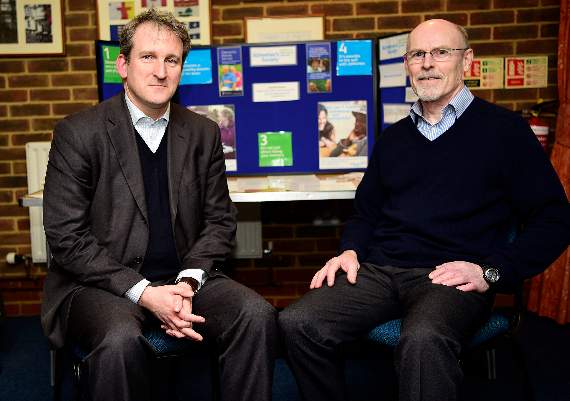
EAST Hampshire MP Damian Hinds held a Dementia Friends information session at Liphook’s Millennium Centre, last month, as part of his ongoing commitment to the Alzheimer’s Society.
Joining him for the evening was Jeff Williams, a dementia support worker for the society.
Mr Hinds became a Dementia Friends champion after personally experiencing the effects, when his mother was diagnosed with having the disease eight years ago.
During the evening, Mr Hinds explained that dementia is not a natural part of ageing and is caused by diseases of the brain.




“The youngest sufferers are in their 30s,” he said. “However, there is more to a person than the dementia – and we must understand it is not just about losing your memory.
“It can also affect thinking, communicating and doing everyday tasks.
“However, it is possible to live well with dementia and with support, people with the disease can and do take an active role in life.
“Despite its growing prevalence, public understanding of the condition remains poor, which is why the Alzheimer’s Society is running a programme to boost awareness, and also why I decided to get involved and become a Dementia Friends champion.” From helping someone to find the right bus to spreading the word about dementia, every action counts.
Mr Hinds added: “Every person is affected differently and there are more than 100 known types of dementia.
“The disease is progressive, difficult to diagnose, but there is a pattern.
“I compare getting dementia to a string of fairy lights, which become faulty and stop working one by one.
“They vary from person to person, but all contribute to dementia. Short-term memory loss is part of the disease, but emotions and feelings remain in tact for an affected person and it is important to provide a feelgood factor to that person’s life.
“People with Alzheimers or dementia still enjoy the company of their loved ones, even if they can’t remember factual things, and regular visits are so important to them.”
There are currently 850,000 known people with dementia in the UK, with numbers set to rise to over one million by 2025.
That figure is predicted to soar to two million by 2051. One-in-six people over the age of 80 have dementia, while there are more than 40,000 people under 65 with the condition in the UK.
There is no cure or disease-modifying treatment for the diseases that cause dementia. Several drugs can help some people with a diagnosis of dementia and several types of cognitive therapy might be beneficial across all types of the illness.
Drug treatments currently available can address particular symptoms in some people, but they are not a cure and don’t stop the disease from progressing in the brain.
The Alzheimer’s Society has now exceeded its target of signing up one million dementia friends and is aiming for a total of four million.
To join visit www.dementiafriends.org.uk or email [email protected]
For more information, support and advice visit www.alzheimers.org.uk or contact the National Dementia helpline on 0300 222 1122.
Comments
This article has no comments yet. Be the first to leave a comment.