

Hearts were broken in card shops this month thanks to Farnham dad Andy Laird and friends.
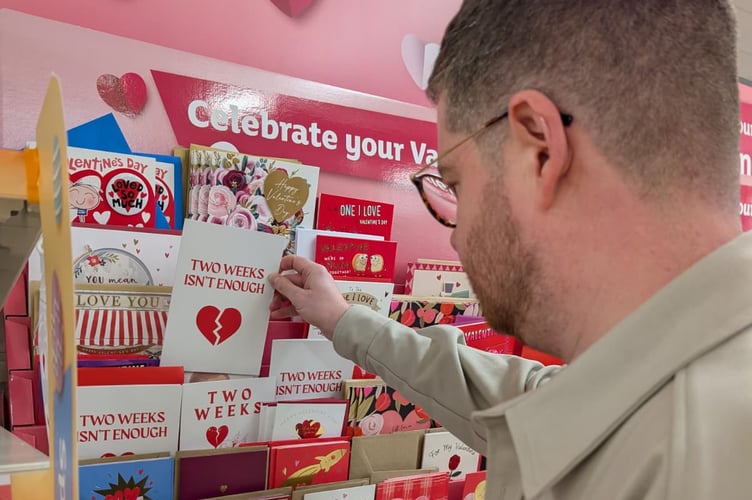
During the weeks leading up to Valentine’s Day, Andy and other parents placed cards featuring a broken heart and the slogan ‘two weeks isn’t enough’ on the shelves to highlight the limitations of UK statutory paternity pay (SPP).
In the UK new fathers and second parents who are employed can take up to two weeks off work during which they receive the lower of £187.18 a week – less than half the minimum wage – or 90 percent of their average earnings. This is the least generous paternity leave in Europe and means many cannot afford it.


.jpeg?width=209&height=140&crop=209:145,smart&quality=75)

Moreover, low-income earners are least likely to claim. Currently, 90 percent of paternity leave claims are made by the top 50 percent of earners, while self-employed people receive no SPP at all. Any new father who has been employed by a company for fewer than 41 weeks before the baby’s due date is also ineligible.
Andy Laird is part of the action group The Dad Shift who conducted a poll into the effects of this paternity leave. It revealed that 39 percent of separated parents felt uneven shared care responsibilities contributed to the relationship breakdown, and 59 percent said poor paternity leave made it harder to share childcare equally over the long term.
In couples still together with children under five, women were 10 times more likely to say they do the majority of the childcare, while 66 percent of all respondents said they would like to share childcare more equally.
Andy Laird’s employers allowed him more than two weeks paternity leave when each of his two children were born. He said: “This allowed me to spend invaluable time bonding with my new babies but also supporting my wife as she recovered from the births.
“I don’t know how we would have coped with only two weeks. It breaks my heart that so many families break up as a result of the immense pressure and inequity created by such stingy paternity and parental leave policies. We can do better.”
A government analysis found that joint parental responsibility for childcare reduces separation risks by up to 92 percent. In Iceland, the introduction of three months' paid paternity leave in 2000 led to a significant reduction in divorce rates, an effect that persisted 15 years after birth.
The Government reviewed parental leave and debated the role of equality in healthy relationships in Parliament on February 12.
George Gabriel, co-founder of The Dad Shift, said: “Mums and dads these days want to share both the load and the joys of raising their kids but policy hasn’t kept up.
“From their very first days as a family, rubbish paternity leave means couples are up against it, and it’s clear that the inequalities that come from it are driving hundreds of thousands to breaking point. The Government’s review of parental leave is their opportunity to fix this and we expect them to take it.”
Comments
We've recently changed our login process. If you have an account for commenting, you will need to re-register on the login window.
This article has no comments yet. Be the first to leave a comment.