
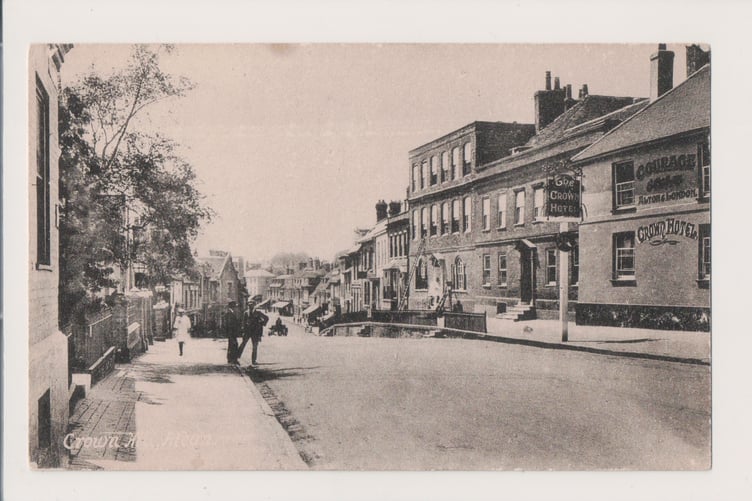
In 1511, diocesan bishops (including the Bishop of Winchester) were authorised to issue licences to local physicians and surgeons after examination by “appropriate practitioners”, writes Jane Hurst.
The earliest woman known to have been licensed in the county was Elizabeth Inwood of Alton. A Quaker, she lived at 4 High Street with her husband Richard, who was also a medical practitioner. In 1709/10, the following testimonial was presented to the Diocese of Winchester:
‘Whereas Elizabeth Inwood Wife of Richard Inwood of Alton in the County of Southton hath for severall years past Approved her Self A Woman of a Good understanding & Judgment in Physick and Chirurgery, Whose Indeavours amongst her Neighbours for the Reliefe of the Afflicted, Both Poore & Rich, hath (Through the Blessing of God) Proved very Successful Even in Cases that hath Appered not Onely Dificult butt Desperate. Wee Therefore …. Doe with Submission Pray that the Said Elizabeth Inwood who hath been Usefull and Charitable amongst us, May have a Lycence Granted her.’
Elizabeth was widowed in 1713 and took on a male assistant, John Curtis, also a Quaker. His testimonial of December 1719 records that he had been apprenticed to his uncle, John Cowdry, as a physician and surgeon. Five months later, he was granted a licence to practise medicine in Alton and five surrounding parishes.
Curtis later married Elizabeth Inwood’s daughter Mary at the Alton Meeting House, and they became ancestors of the Alton Curtis family. Their descendants included William Curtis, the botanist; another William Curtis, known as Jane Austen’s “Alton apothecary”; the William after whom the Curtis Museum is named; and William Hugh Curtis, who left the Allen Gallery building to the museum as an annex.
For more on Alton in the late 1600s, A History of Alton 1650 to 1700 is available at Goldfinch Books in Alton High Street, or via [email protected].
Comments
This article has no comments yet. Be the first to leave a comment.