
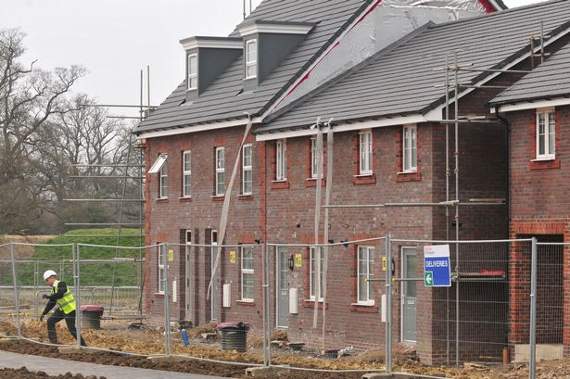
WAVERLEY has strongly refuted a charge by a Haslemere architect that the borough council is “rubbish at sustainability”.
One-World Design director Chris Medland said: “Haslemere will have around 400 more homes according to Waverley’s Plan proposed Local Plan Part 2, which includes 50 homes in Red Court in Scotland Lane, 50 homes in Wey Hill Fairground Car Park and 45 homes at a derelict site in Wey Hill – and separately 1,800 homes at Dunsfold Aerodrome.
“That’s good news for those seeking to get on the housing ladder, the local economy and for all sorts of social reasons, but because of Waverley Borough Council’s extremely weak position on sustainability standards, this is terrible news for our environment.
“It is planning policy and building regulations that form the framework for standards within which new homes are built. This framework was severely weakened in the past five years by the abolition of the Code for Sustainable Homes (Code 5) and further undermined by the scrapping of the Zero Carbon Homes plan.



“What was previously set as a minimum standard from which to progress towards Carbon Zero has in reality become the maximum standard enforceable. However, shockingly some councils, including Waverley, don’t even enforce this low standard and developers are allowed to build homes to building control requirements only.
“Waverley, as an absolute minimum should demand the recommended UK Green Building Council requirement of all new homes going forward that new build residential development should achieve reductions in CO2 emissions of 19 per cent below the target emission rate of the 2013 edition of the 2010 building regulations (Part L)’.
“As a statutory consultee on housing developments, I have asked Haslemere Town Council to seek that the above condition be applied to all applications for new homes. This is a stop gap measure until such a time as Waverley adopt this or a more ambitious standard in the interests of achieving sustainable development.”
Refuting Mr Medland’s objections, Waverley Borough Council said it is committed to helping shape new developments that can reduce carbon emissions.
The council’s adopted Local Plan Part 1 contains a policy on sustainable construction and design, which includes a number of tests that are considered by planning officers when determining applications in relation to measures to promote sustainable patterns of development and reduce levels of greenhouse gas emissions.
The tests include ensuring that new developments include measures to reduce energy and water use through design, landscape, layout or orientation and increasing the density of buildings and supporting the mixed-use reusing and recycling building materials.
The Local Plan also states that where developers, for technical or financial reasons, consider it not possible to achieve the standards required by this policy, the onus will be on them to provide appropriate evidence in support of any planning application.
A borough council spokesman added: “In addition, Waverley has published its own design standards and specifications for new council homes and is successfully implementing energy efficiency standards well above the Part L minimum.
“The council also ensure building regulations are complied with through its building control service.
“The council’s Local Plan Part 1 and its policies were subject to independent examination and found to be sound and to comply with National Planning Policy Framework.”
* On December 11, Waverley Council firmed up its arrangements for collecting the higher property charges (CIL) developers will pay toward infrastructure from March 1 next year.
Find out about planning applications that affect you by visiting the Public Notice Portal.
It agreed to establish a CIL advisory board with delegated authority to agree detailed criteria for spending strategic CIL receipts and to give Waverley Executive delegated authority to approve strategic CIL fund spending.
Comments
This article has no comments yet. Be the first to leave a comment.