
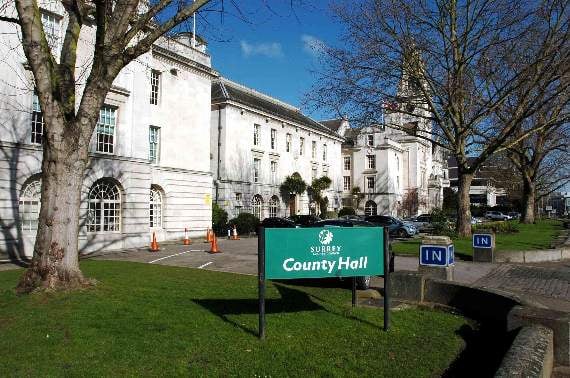
RESIDENTS in Waverley borough owe more money to struggling Surrey County Council (SCC) through council tax than in any other borough or district in the county, new figures have revealed.
At a time when local authority budgets are under enormous financial pressure, a total of £2,673,000 is owed to the county from taxpayers in Waverley according to data collected from all the 11 councils in Surrey.
The total cost owed to Surrey County Council in council tax combining all 11 boroughs and districts is £19,495,000 - just £1.5 million shy of the £21m the county council proposes cutting from its Special Educational Needs and Disability (SEND) budget this year.
SCC is reported to be facing a £100m cash crisis, one of the worst financial shortfalls in the country, with significant cuts earmarked to services supporting children, schools and families (£25.5m), public health (£2.3m), adult social care (£18.6m), environment and infrastructure £1.3m), fire and rescue service (£660k), to name a few.




The SEND cuts, including more than £1m from home to school transport and £2m in grant funding, will be subjected to a judicial review at the High Court this October, initiated by five Surrey families including the Hollow family from Farnham.
The figures are for all arrears, including late payments that will still be paid, accumulated over a number of years up to March 31, 2018, as contained in SCC’s statement of accounts for the year.
The combined amount of outstanding paid tax from the 11 authorities has meant SCC has had to record ‘local taxation arrears’ of £8.1 million in “bad debt” from its share of the unpaid tax and business rates - money it thinks it will never claim back.
That is double the amount of savings being planned from changes to Surrey’s 58 children’s centres and the entire budget for the council’s child and adolescent mental health (CAMHS) services.
Council tax and business rates are collected by the boroughs and districts which also collect the adult social care precept and amounts on behalf of county and parish councils, and Surrey Police. SCC’s share goes towards the £1.7 billion set for its overall budget.
Mole Valley District Council is owed the most in business rates accumulating £260,000 of arrears over the year, but Waverley Borough Council is next with £210,000. In total, £1,309,000 is owed to the county council by businesses in the county.
SCC’s share of unpaid business rates and council tax combined totals £20,803,000. This means the true cost of total unpaid tax and rates in the county is much higher than £21m as SCC’s share is just a percentage of a council tax bill.
Defending its record, Waverley Borough Council says it has “excellent collection rates” and is constantly reviewing how it interacts with residents in terms of how they like to pay.
A council spokesman said: “Waverley Borough Council’s council tax collection rates are excellent; the organisation collects just over 99 per cent of council tax each year. Waverley also consistently collects 81 per cent of council tax arrears (£2.673m).
“As Waverley has a much lower debt write off figure and does not write off debt that is actively being collected, this can make the value of the arrears seem higher. Councils that are more willing to write off debt may have a lower arrears figure.
“The council is always reviewing how it works with tax payers to keep up with the changes in people’s preferences in transacting with the council, such as mobile devices and flexibility of dates. This is a successful strategy that reflects in our excellent collection rates.”
Peter Webb, of Surrey Tax Action Group, said: “Surrey government is known to be in financial difficulty and continues to give the impression that having ‘visions’ of 12 years hence and tick-box consultations will bring in the money.
“Better that effort was diverted to recovery of more of the council tax and business rates that are in arrears now.”
Council tax helps pay for services such as bin collections, education, social services and street lighting as well as the running of council-owned buildings and facilities.
It is based on the value of a property and applies to all domestic properties including houses, bungalows, flats, maisonettes, mobile homes or houseboats, whether owned or rented.
A Band D property pays a combined £1,411.219 to SCC including the adult social care precept. The highest amount paid is £2,822.58 for a Band H property.
This is then added on to the borough and districts banding figures which vary between the councils and even between parishes if a parish council exists.
For example, total tax charge for a Farnham town resident in Waverley in a Band D property for 2018/19 would be £1,887.52 . Someone living in a Band H property has to pay £3,775.04.
The bands are based on property value with A being the lowest and H being the highest.
Business rates are charged on most non-domestic properties, such as shops, offices, pubs, warehouses, factories, holiday rental homes or guests houses.
Bad debt is what an organisation or business will calculate as money it estimates it will not recover in chasing up unpaid monies.
A council can take legal action against a resident who does not pay their council tax.
Comments
This article has no comments yet. Be the first to leave a comment.