
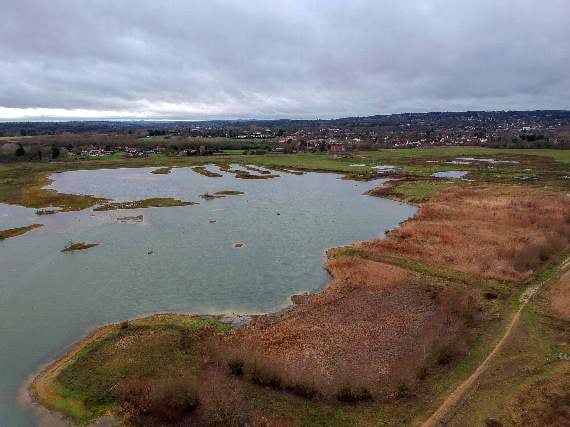
The summer holidays may be upon us, but July is the avian equivalent of early autumn, writes Alan Wynde.
Migrants which have nested in Iceland or Northern Scandinavia have finished breeding and are making their way back to their winter habitats in Africa, stopping on passage in places like Tices Meadow.
This is why a Common Sandpiper was seen at Tices on June 28, followed by two Black-tailed Godwits were there also on July 2.
Late migrants like Swifts are still rearing their young. They really are amazing birds, spending the vast majority of their lives on the wing. They eat, sleep and mate on the wing and only rest when incubating their eggs.
They spend about 12 weeks with us before returning to Africa, following the rains as far as Mozambique, before starting the journey again next spring.
Their numbers of fallen significantly in recent years due to a lack of nesting places and reduced food supply but we’ve done our bit to help by erecting a Swift tower, where several are nesting at the moment, and we hope a colony will follow.
If you want to learn more about Swifts and the countless other birds which visit Tices Meadow, then pop along this Saturday (July 25) as Surrey County Council is holding a welcome day from 10am to 2pm.
There will activities throughout the day with highlights including river dipping for invertebrates, a bug hunt, butterfly and bird walks.
It is also an opportunity to meet the team responsible for the management of this special place, including the SCC countryside team, Surrey Bird Club, Surrey Bat Club, and members of the Tices Meadow Bird Group.
River dipping for invertebrates is important in gaging the health of a water course. The stream which runs through Tices is actually the headwaters of the River Blackwater, so the invertebrates found there are a base line for the what happens downstream.



Invertebrates are an important food source for fish, dragonflies and birds, but they are very susceptible to pollution, so a count is a good measure of a river’s health.
Recording started seriously around 25 years ago following a serious pollution incident on the Wey. Members of the Frensham Fly Fishers became recording invertebrates and this grew into a national organisation run by dedicated citizen scientists: The Riverfly Partnership.
The butterfly hunt will be fascinating and we have some good news to share, as it’s been an excellent year for the species with Silver Studded Blue butterflies being recorded for the first time by the Tices team.
Their presence is remarkable as they require a very precise habitat and food source. They only live for a few days and rarely fly more than 50 metres from their colony, so how they got to Tices is puzzling.
Friendly and knowledgeable volunteers will lead the bug hunt and bird walk at Tices, called the best inland birding spot in the South.
If you fancy learning more either pop along this weekend or visit ticesmeadow.org
Comments
We've recently changed our login process. If you have an account for commenting, you will need to re-register on the login window.
This article has no comments yet. Be the first to leave a comment.